

In the mountains of Epirus, in northwestern Greece, there lives one of the most emotionally profound musical traditions in the world: miroloi (μοιρολόι). Miroloi is a lament — not a song for entertainment, but a song for truth. It exists to give voice to grief, longing, separation, and the great mysteries of life and death. Its sound is slow, spacious, and unbound by strict rhythm, following breath and feeling rather than time. To hear it is to feel the human soul speaking without filter.
The word miroloi comes from ancient roots meaning “words about fate.” It is music shaped by destiny, loss, love, and memory. Often played on clarinet or violin, or sung by women, it sounds like crying through melody — not dramatic, but deeply sincere. In Epirus, grief has never been meant to be hidden. It has always been honored.
Why Greeks Use Miroloi
In traditional Greek village culture, mourning was not private or silent. When someone died, women would gather and sing laments over the body, naming the life that had passed, expressing pain, love, regret, and remembrance. Miroloi became the ritual container for these emotions. It gave grief structure so it could move instead of stagnate.
Miroloi was performed:
• At funerals
• During memorials
• On anniversaries of death
• During times of deep collective sorrow
• And sometimes even at weddings or festivals, as a reminder of life’s fragility
To Greeks, grief was never weakness. It was devotion. To mourn was to prove that love had existed.
The lament also served a spiritual role. It was believed to help guide the soul of the departed into the next world and to comfort the living. Sound became a bridge between worlds — between the living and the dead, the seen and the unseen.
The Lineage of an Ancient Sound
Miroloi carries an unbroken lineage stretching back through:
• Byzantine chant
• Balkan ritual laments
• Pre-Christian funeral rites
• Ancient Greek poetic mourning traditions
For centuries, it was passed orally from mother to daughter, from musician to apprentice, from village to village. There were no written scores. Only memory. Only breath. Only the willingness to sit with sorrow and sing.
This is why miroloi feels timeless. It was never modernized. It was never commercialized. It remained what it was always meant to be: a ritual language for grief and human vulnerability.
When miroloi is played, it is not just one person expressing pain. It is the echo of many generations who learned that sorrow must be honored in order to soften into wisdom.
Epirus: A Land that Teaches the Soul
Epirus is a mountainous, wild, and quiet region. Stone villages, winding rivers, and ancient paths hold the memory of shepherds, widows, travelers, and saints. This landscape shaped miroloi. Hard land taught deep feeling. Isolation taught reflection. Loss taught reverence.
There is something about Epirus that invites stillness. It is not flashy or loud. It is contemplative. It carries a gravity that draws the heart inward. It is a place where silence feels intelligent and sound feels sacred.
This is why Miroloi could only have been born here.
Why This Matters Today
In the modern world, grief is often rushed, avoided, or medicated away. We are taught to “move on” instead of to move through. Miroloi offers another way — an ancient nervous system wisdom that says:
Emotion must be expressed to be healed.
Loss must be witnessed to be integrated.
Pain must be honored to transform.
Miroloi teaches us that sorrow is not something to fix — it is something to listen to.
It teaches that music can carry what words cannot.
It teaches that memory lives in sound.
A Vision for Future Wellness Retreats in Epirus
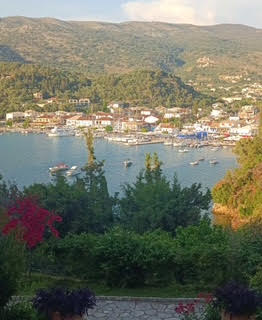
My ancestral roots are in Epirus. This land carries the stories of my lineage, and it is where I envision offering future ZOE Yoga Lifestyle wellness retreats. These retreats will not be about luxury or escape. They will be about returning — to the body, to the breath, to nature, and to ancestral memory.
The spirit of miroloi will live inside these retreats:
• Space for grief and healing
• Space for silence and listening
• Space for rest and reflection
• Space for deep presence
• Space for ritual and remembrance
Just as miroloi creates a container for sorrow, these retreats will create a container for nervous system restoration, emotional integration, and spiritual grounding. We will walk ancient paths, breathe mountain air, and allow the land itself to teach us how to slow down and feel again.
Epirus is not a place you visit.
It is a place you remember.
Be the First to Know
These retreats are part of a long-term vision rooted in culture, lineage, and healing. They will be announced first to my email community.
If you feel drawn to this land…
If you feel moved by this music…
If you feel called toward a slower, deeper way of living…
 Sign up for my newsletter to be the first to know when the Epirus wellness retreats launch.
Subscribers will receive early access, special offerings, and behind-the-scenes updates as this vision becomes reality.
Miroloi reminds us:
We belong to the earth.
We belong to memory.
We belong to each other.
And Epirus is waiting.